
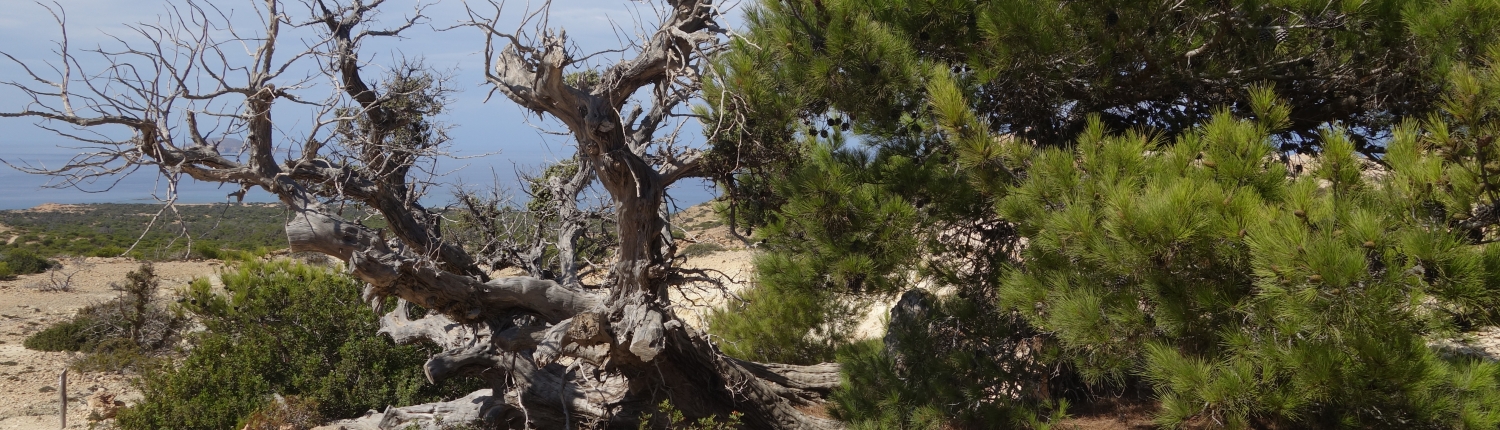
The vegetation of Gavdos is characterised by two species of juniper, lentisk and turpentine pine, the latter of which has only recently appeared. Pollen from the south of the island (lagoon of Trypiti) was analysed; the 3,000-year-old pollen showed birch and oak, species that are not present on the island today. Birch and oak are also scarce on nearby Crete. Low pollen values were also found for pine, which contrasts with the situation today. Turpentine pine is now abundant, as it is in the neighbouring part of Crete and in other areas of the eastern Mediterranean.
Scientific research on Gavdos has been conducted for over 30 years. The island’s archaeological sites have been systematically mapped, its vegetation studied, and the extent of prehistoric human influence on ecosystems investigated. This work involved various universities in Crete and foreign researchers. The vegetation study was conducted in partnership with the University of Groningen in the Netherlands.
Gavdos lies in the Lybian Sea (25 E; 36 N) and covers a surface of 33 sq. kilometres. Two thirds of the island is covered by Neogene sediments (conglomerates, sands, marls, sandstones and marly limestones) and Quaternary sediments (Pleistocene limestones, calcareous sandstone, aeolianites, sands and sand-dunes and fossil rich sea terraces (Bottema et al, 2003).
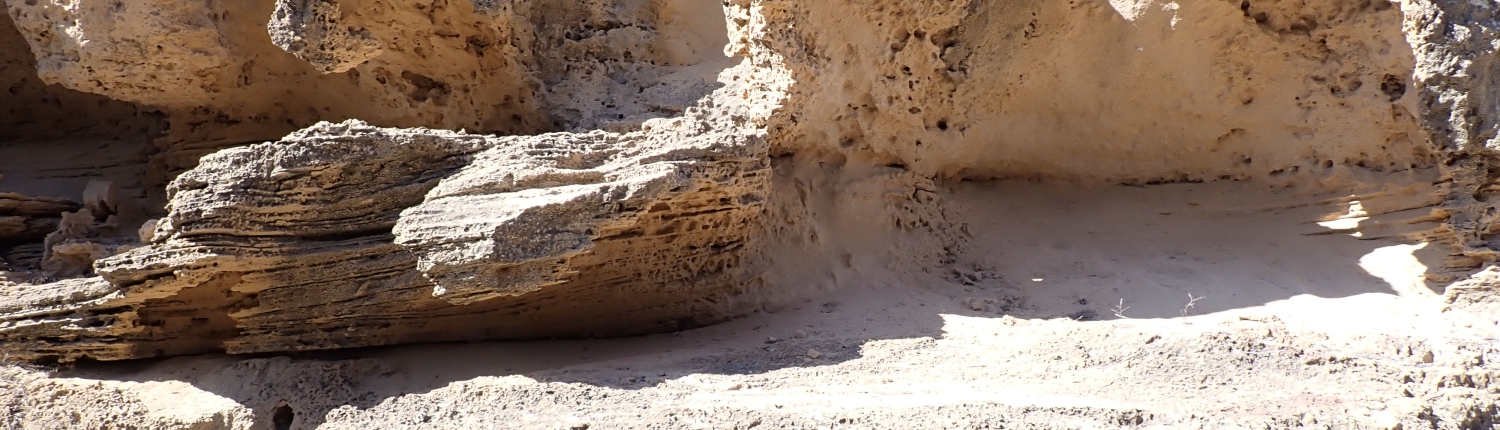
Tectonic forces are very well visible in the rocks in the southern and western part, as the island’s position is at the subduction front, where the African tectonic plate dives below the Eurasian plate. Folded layers of the Pindos unit are exposed esp. in coastal areas, e.g. near Lakoudi beach towards the beach of Trypiti in the south. The basin of Trypiti, where the pollen cores were taken, is a result of tectonics and erosion; the morphology follows a natural fold in the Pindos rocks.